2026.10.24
Summary of key learning throughout Module 4
Many technologies can enhance students’ learning experiences. AR and VR can be used to help students create prototypes or to provide new opportunities for simulation-based labs. 3D printers can be used by teachers and students to create inexpensive models of science phenomena, such as molecular structures, to help students gain an intuition for abstract concepts (Trujilo-Cayado, 2023)
Artificial Intelligence continues to be a source of worry and confusion for educators. I still feel it is unclear how best to use AI in the classroom; however, signs point to a need to help students develop technological competency with AI so they use it as a tool rather than a crutch. One thing is clear: AI is already in our classrooms, and educators need to consider their expectations for students.
Gamification can help students gain an appreciation that mistakes can be corrected, and need to be made in order to learn (Nilüfer, 2023). It can positively impact “motivation-related components” of student learning. Open learning environments are popular ways for students to learn skills without high upfront costs, and are often gamified to retain students.
The “maker movement” can promote curiosity, open-ended exploration, and self-directed learning for students (Krakower, 2016)
Connections to my current practice
I currently use simulations during lessons to engage students and encourage them to come up with hypotheses for various science concepts. I use Kahoots, Blookets, and other games to gamify my classroom. Sometimes, I use games like Wordle, Globle, and Blossom to play games without a STEM objective to encourage class collaboration and culture-building.
New Ideas I have incorporated into my practice since Module 1
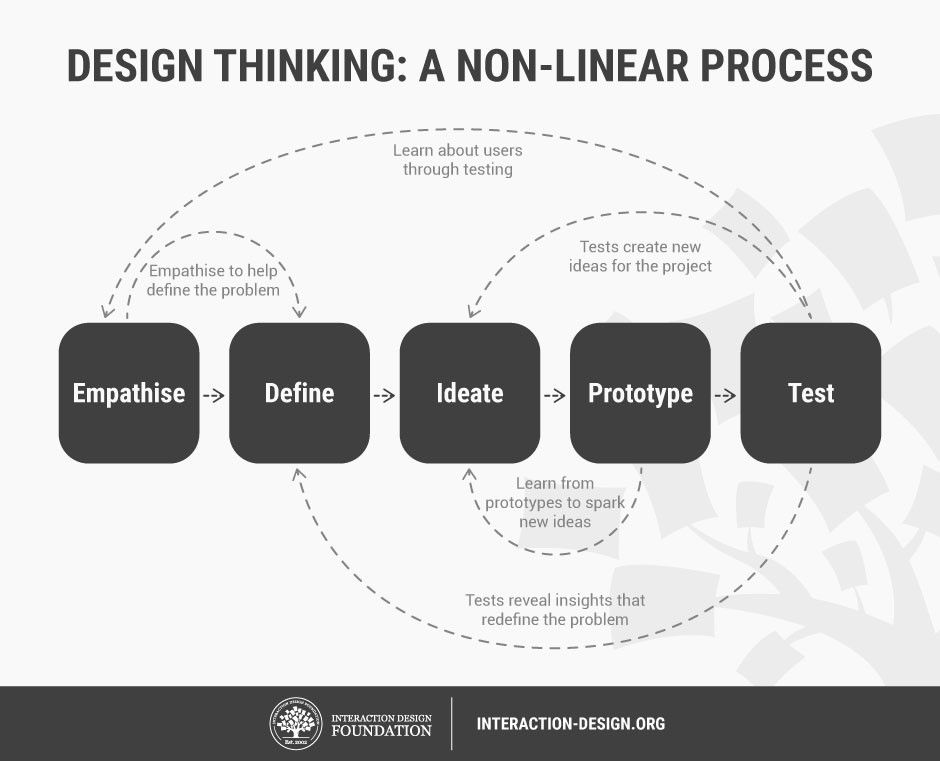
Since Module 1, I have incorporated design thinking in my everyday life to help develop lessons, unit plans, and apartment upgrades. I have been working on considering the end user, creating prototypes, and iterating on the prototypes, specifically for building a side table for my apartment.
I have looked for opportunities to promote design thinking with students during my teaching-on-call work.
New ideas I would like to try incorporating into my practice
I would like to try incorporating 3D printing into my practice. First I would like to make my first prints using open-source models, then I would like to try to create something myself. Hopefully I can gain enough proficiency in 3D printing to encourage students to use the 3D printers available to them at the schools I work.
How I will improve collaboration and communication in my classroom
I will have students complete a “collaboration compass,” and use their compass results to help create groups. I will co-create group expectations with the students to provide clear guidelines for inclusive collaboration.
How I will improve collaboration and communication in my current role
I will reach out to teachers in different science, mathematics, arts, and engineering classes to create collaborative projects that span competencies in both courses. I will improve my communication skills by practicing active listening as outlined by Treasure’s video 5 Ways to Listen Better
Revisiting areas of growth from Module 1
In Module 1, I created a personal growth plan with two areas of growth to incorporate STEM principles in my practice.
First, I wanted to learn ways to incorporate STEM principles in senior sciences, with the specific questions of “How can I collaborate with teachers from other disciplines to help students find connections between them?” and “What technologies can I learn about that could give students something to be excited about?”
I think that Module 3 and Module 4 helped me answer these questions. In Module 3, I learned that active listening and communication skills can help me collaborate with other teachers and create collaborative classrooms with project-based learning intentions. I think applying project-based learning can help connect STEM subjects. In Module 4, we discussed different technologies students can use to get excited about learning STEM. I think 3D printing materials that help students build intuition for abstract ideas in physical 3D space have a lot of potential for creating rich learning experiences. I also think that utilizing 3D CAD software and simple AR applications can help students visualize and prototype for project-based learning activities.
Second, I wanted to consider how I can reduce racial and gender bias in my classrooms by using the Mindful STOP method. I have become more proficient in using the mindful STOP method to tackle challenges that have come up in classrooms.
Moving forward, I would like to learn how to assess project-based learning equitably. I would also like to learn how to encourage students to think critically about technology’s social and environmental implications.
Links, artifacts, and future articles of interest
Educational Technology Mindmap
https://www.mindmeister.com/app/map/4108157618?t=gFuh2WpH4k
Technology I already use in the classroom
| Explanation of the Technology | 1. PhET – Changes in matter simulation This interactive simulation uses moving “balls” to represent molecules in different states of matter. Users can increase and decrease pressure, heat, and change the molecule type. 2. Vernier Motion Sensors Vernier motion sensors measure position, velocity, and acceleration of moving objects. The data is recorded into a free browser-based program that organizes the data into interactive graphs. |
|---|---|
| How I Use the Technology | 1. PhET – Changes in matter simulation I use this simulation across all grades to explain concepts like changes in state, kinetic molecular theory, and pressure. I ask students to predict what will happen when one of the variables is changed. I will also ask students to tell me which variable to change to get them more involved. 2. Vernier Motion Sensors In Physics 11, students use textbooks to raise one end of their desk, creating a slope for a cart to roll down. They use a chromebook and Vernier Motion Sensor to record the motion of the cart as it rolls down the desk. Students analyze the data to make predictions and gain intuition for acceleration, velocity, and distance. My favourite is the small fact that the “integral” is the “area under a graph.” |
| An image & a Link to the Tool (if web-based) |
Improving Group Work in STEM courses presentation by myself and Kelsey Harpman
Some of the articles I learned from throughout the unit
Al-Ansi, A. M., Jaboob, M., Garad, A., & Al-Ansi, A. (2023). Analyzing Augmented Reality (AR) and Virtual Reality (VR) recent development in Education. Social Sciences & Humanities Open, 8(1), 100532. https://doi.org/10.1016/j.ssaho.2023.100532
Fleming, L., & Krakower, B. (2016, July 19). Makerspaces and equal access to learning. Edutopia. https://www.edutopia.org/blog/makerspaces-equal-access-to-learning-laura-fleming-billy-krakower
Said, S. (2023, August 17). How to motivate students to work in collaborative teams. Edutopia. https://www.edutopia.org/article/collaborative-group-learning-high-school
Sharma, S. (2023, August 14). Guiding students to assess the merits of Artificial Intelligence Tools. Edutopia. https://www.edutopia.org/article/teaching-students-use-ai-tools/
Stehle, S. M., & Peters-Burton, E. E. (2019). Developing student 21st Century skills in selected exemplary inclusive STEM high schools. International Journal of STEM Education, 6(1). https://doi.org/10.1186/s40594-019-0192-1
Treasure, J. (2011, July 29). 5 Ways to Listen Better. YouTube. https://www.youtube.com/watch?v=cSohjlYQI2A
Zeybek, N., & Saygı, E. (2023). Gamification in education: Why, where, when, and how?—a systematic review. Games and Culture, 19(2), 237–264. https://doi.org/10.1177/15554120231158625